Vieux Chaillol
3,163 m, the highest point of the Champsaur

The Champsaur is the valley that runs north from Gap, in the French Southern Alps, and Vieux Chaillol is the peak standing at the head of it. At 3,163 m it marks the western edge of the Écrins massif, a dark pyramid closing the skyline to the north-east with nothing its own height for several kilometres around. There is no glacier between you and the top, and no rope or crampons involved in summer. It is a day on the hill, and a long one.
At Altimood we have it in front of us all year, and it is one of the first hills we put up when somebody asks for a serious day with no exposure on it. It also answers the I have been above 3,000 m question without becoming an alpine route (the Pic Turbat, one valley over, is that sort of carry-on) or mountaineering.
Below are the 2 ways up, each with its numbers and its trace.
The 2 routes up Vieux Chaillol


2 valleys give access to the top, and what separates them is the length of the day rather than the ground. Neither has an exposed section on it. Both want legs that have been used recently.
| Route | Start | Distance | Ascent | Time | Grade |
|---|---|---|---|---|---|
| Chaillol 1600 | Saint-Michel-de-Chaillol, 1,600 m | 16 km there and back | +1,560 m | 8 hrs | 4/5 |
| Champoléon | Les Borels, 1,275 m | 23.5 km circular | +1,960 m | 11 hrs | 5/5 |
Those are moving times, breaks left out. We get them from our own calculator, fed with the distance and ascent of the 2 traces on this page: 4 methods (Naismith, the German Alpine Club formula, the Swiss Alpine Club formula and effort-kilometres), averaged, then rounded up to the next half hour. On a day with this much climbing in it the 4 land miles apart, anywhere from 5 hrs 50 to 10 hrs 20 on the Chaillol side alone. Take the 8 hrs as a middle and move it for your own pace, your pack and how long you sit down.
On our difficulty scale the Chaillol side is a 4 out of 5 and the Champoléon circuit a 5. The 7-question level test will place you on that scale in a couple of minutes if you would rather not guess.
To put it in Irish terms: the Chaillol side is Carrauntoohil from Cronin’s Yard with half the ascent again on top and a couple of extra kilometres, and the Champoléon circuit is the Coomloughra Horseshoe plus another 650 m of climbing and 10 km of ground. The surface is where the comparison breaks down in your favour. The path is built and drained the whole way to the cabane des Parisiens, so none of that ascent goes into bog or pathless heather, and you hold a pace the numbers would not predict. Above the cabane it turns to scree, slow in its own way but never soft underfoot. The altitude is the other unfamiliar part, and it works for you here: the car park at Chaillol 1600 is already 560 m higher than the top of Carrauntoohil, so every metre of both routes happens above anything in Ireland, and the summit still only reaches 3,163 m.
Start early whichever side you pick. The upper third of both routes is bare rock with no shelter on it, and a July or August afternoon storm leaves you nowhere quick to go.
Vieux Chaillol from Chaillol 1600


The short way, and the busy one. Chaillol 1600 is a small ski village, and the road takes you to 1,600 m, which is 300 m of climbing you do not have to do from the valley floor. The path rises steadily to the col de la Pisse, then traverses across to the cabane des Parisiens before working up through scree and slabs to the top.
There and back, down the way you came up. The logistics are simple and you stay uncommitted the whole way, so you can turn at any point, which matters on a day of this size. If you are ahead of time at the cabane des Parisiens, the canal de Mal-Cros and its stone tunnels are worth the extra half hour.
With the daylight short or the sky doubtful, the pic Queyrel (2,433 m) leaves the same car park and asks a good deal less of you: 11 km, 730 m of ascent, a natural rock arch on the ridge and a view that already covers the whole Champsaur.
- Start: Chaillol 1600 (Saint-Michel-de-Chaillol), 1,600 m
- Distance: 16 km there and back
- Ascent: +1,560 m
- Time: 8 hrs
- Grade: 4/5 (ascent, length, rocky ground high up)
- Season: July to October
- Distance: 16.1 km
- Dénivelé positif: 1563 m
- Dénivelé négatif: 1567 m

Vieux Chaillol as a circuit from Champoléon


Champoléon puts you 325 m lower at the start, in the Drac Blanc valley, and the circuit closes naturally over the refuge du Tourond.
23.5 km and 1,960 m makes this one of the biggest hillwalking days in the Champsaur. Someone fit who leaves before first light will get round it inside the day, but it works better split, with a night out on the ridge, bivouac style, and the top taken in the morning light.
- Start: Les Borels (Champoléon), 1,275 m
- Distance: 23.5 km circular
- Ascent: +1,960 m
- Time: 11 hrs
- Grade: 5/5 (length, ascent, a full day above 2,000 m)
- Season: July to October
- Distance: 23.6 km
- Dénivelé positif: 1957 m
- Dénivelé négatif: 1956 m

The view from the top

Nothing of the same height stands within several kilometres of Vieux Chaillol, so the view off the top runs a clean 360. The Écrins National Park summits line up to the north and east, the Olan and the Sirac nearest. The hedged farmland of the Champsaur falls away to the south-west towards Gap, the cliffs of the Dévoluy standing behind it. Given a clear day, the Vercors closes the horizon to the north-west and Mont Ventoux appears due south.
Ibex hold both sides of the hill, and they will sit and let themselves be watched as long as nobody closes the distance. Chamois keep to the grass lower down, and marmots have taken over every alpine pasture on the mountain, whistling at you long before you pick them out. The first 2 hours after sunrise and the last 2 before dark are when the 3 of them are moving. Through the heat of the middle of the day the ibex go up onto shaded rock under the crest and take a lot more finding.
The canal de Mal-Cros, water taken through the mountain


A stone-lined trench leaves the col de Riou Beyrou (2,695 m), where the cabane des Parisiens stands, and heads due east towards the lac de Mal-Cros. That is the canal de Mal-Cros, and it earns the detour. An imperial decree of 1853 gave the Champsaur the right to the meltwater of the upper Mal-Cros valley, over on the Champoléon side, and to bring it through the mountain for the meadows of Saint-Michel-de-Chaillol, Saint-Julien and Saint-Bonnet. Intake at 2,818 m, distribution point down at Chaillol at 1,750 m, and in between the canal crosses the col de Riou Beyrou and then the col de la Pisse (2,354 m).
Plenty of it survives, and it can be walked: channels cut in dressed stone, traverses hacked out of the cliff face, and a vaulted tunnel 114 m long under a scree slope that you go through by head torch. The men who built it were housed in what is now the cabane des Parisiens. The water reached Chaillol in 1872, and the branches towards Saint-Bonnet were done by 1878. The ones intended for Buissard and Bénévent were never built. Since 2004 an association has been restoring the upper sections, and that stretch is waymarked with information boards along it.
Climbing Vieux Chaillol with a guide in 2026
The mountain guides at Altimood live in the Champsaur-Valgaudemar and take this ascent as a day out, in a small group. Over the 8 to 10 hours the work is mostly pacing the group and watching the sky. Where the pace allows it, the stops are what leave room for the wildlife, the plants and the geology of the mountain.
Our other trips in the Champsaur-Valgaudemar
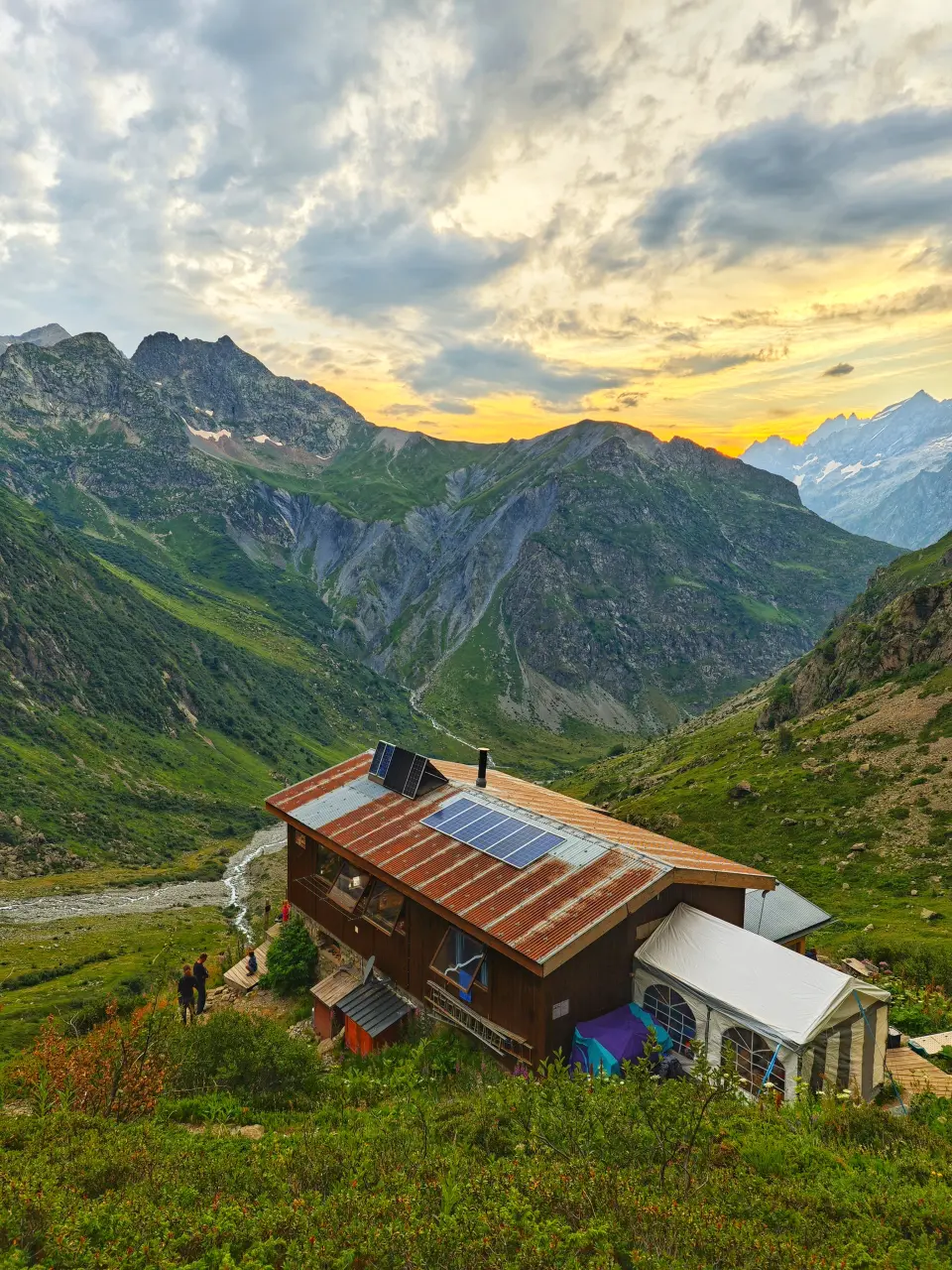 France | Southern Alps
Écrins National Park Traverse
From 754 € – 5 daysA 5-day guided trek through the wildest part of the French Alps.
Know more →
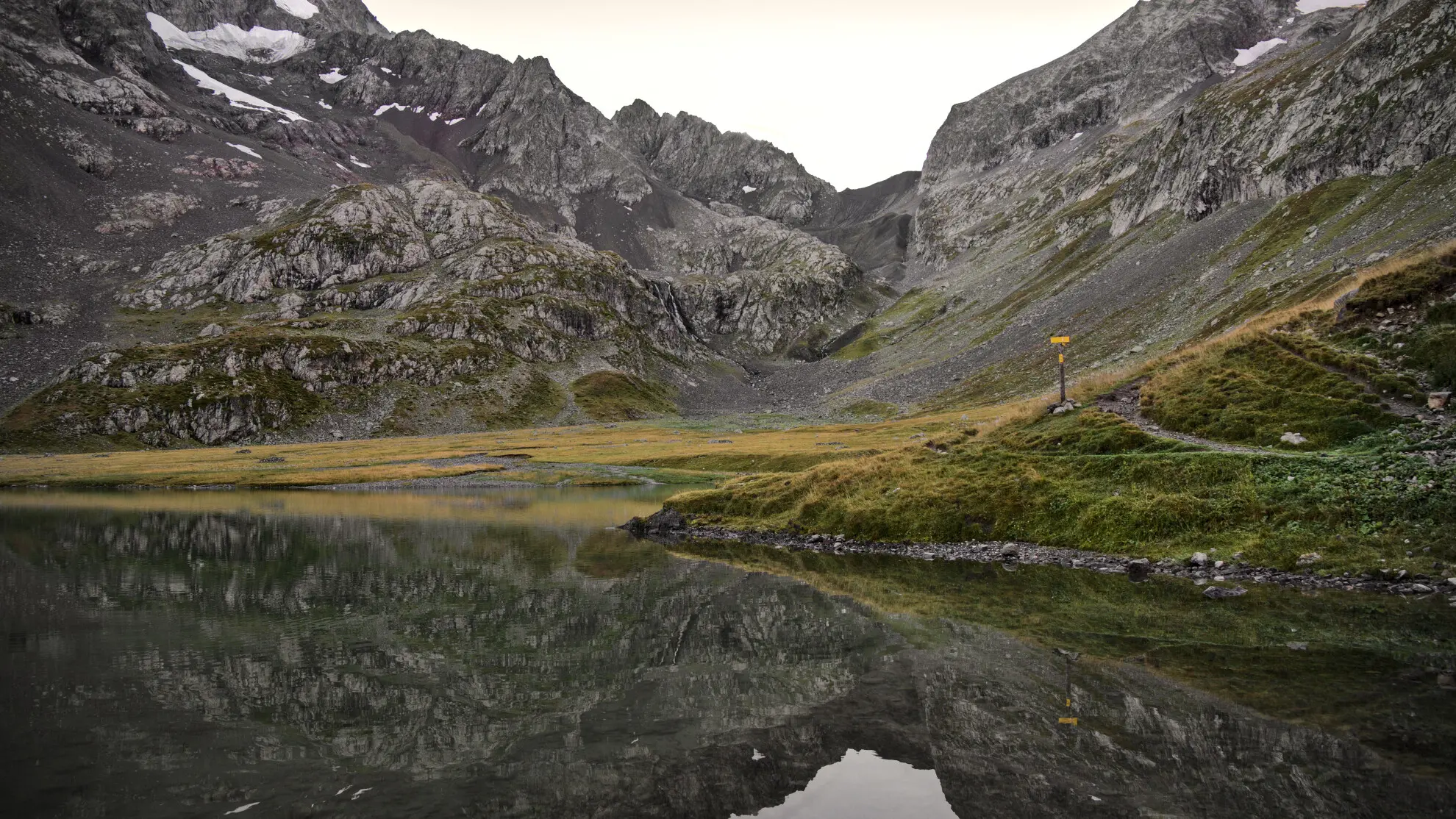 France | Southern Alps
Écrins Tour in 9 Days - Comfort
From 2 519 € – 9 daysThe GR54 stripped down to its highest passes, in 8 walking days, with a twin room and a daypack every evening.
Know more →


Vieux Chaillol is the high point of the tour du Vieux Chaillol into the bargain, the regional long-distance route that goes round the massif in 4 to 6 days between the Champsaur and the Valgaudemar. Coming over for a week rather than a day changes what is worth building around it: the 9-day Écrins tour crosses this same ground on its way round the massif, and a week put together around your own dates and group can take Vieux Chaillol as its big day.
Practical information
Which map covers Vieux Chaillol?
Carry the TOP25 3437 OT (Champsaur, Vieux Chaillol), which has both routes on it end to end. It is 1:25,000 with contours every 10 m, so it holds roughly twice the detail of a Discovery sheet and shows every hut, wall and water channel on the hill. Above the cabane des Parisiens the waymarking thins right out and the ground stops offering landmarks: from there you go on cairns, on the shape of the broad ridge and on the col below you. Take the bearing off the map before the cloud arrives rather than after.
When to climb Vieux Chaillol

July to October. Snow lies late up on the summit section, and before the start of July the upper slopes want an ice axe and crampons more than a pair of poles. September is the pick of the 4 months: long enough days for the Champoléon circuit, and clearer air for the view.
Vieux Chaillol in winter

In winter the summit itself falls between committing snowshoe ground, ski touring and winter mountaineering. The valleys below it are a different proposition and make grand snowshoeing country, with lower objectives and days cut to the daylight there actually is.
Keep reading


- Guided Hikes in the Alps
- Écrins national park hiking
- Vieux Chaillol